Bonani DOSH, Dhaka - 1230, Bangladesh
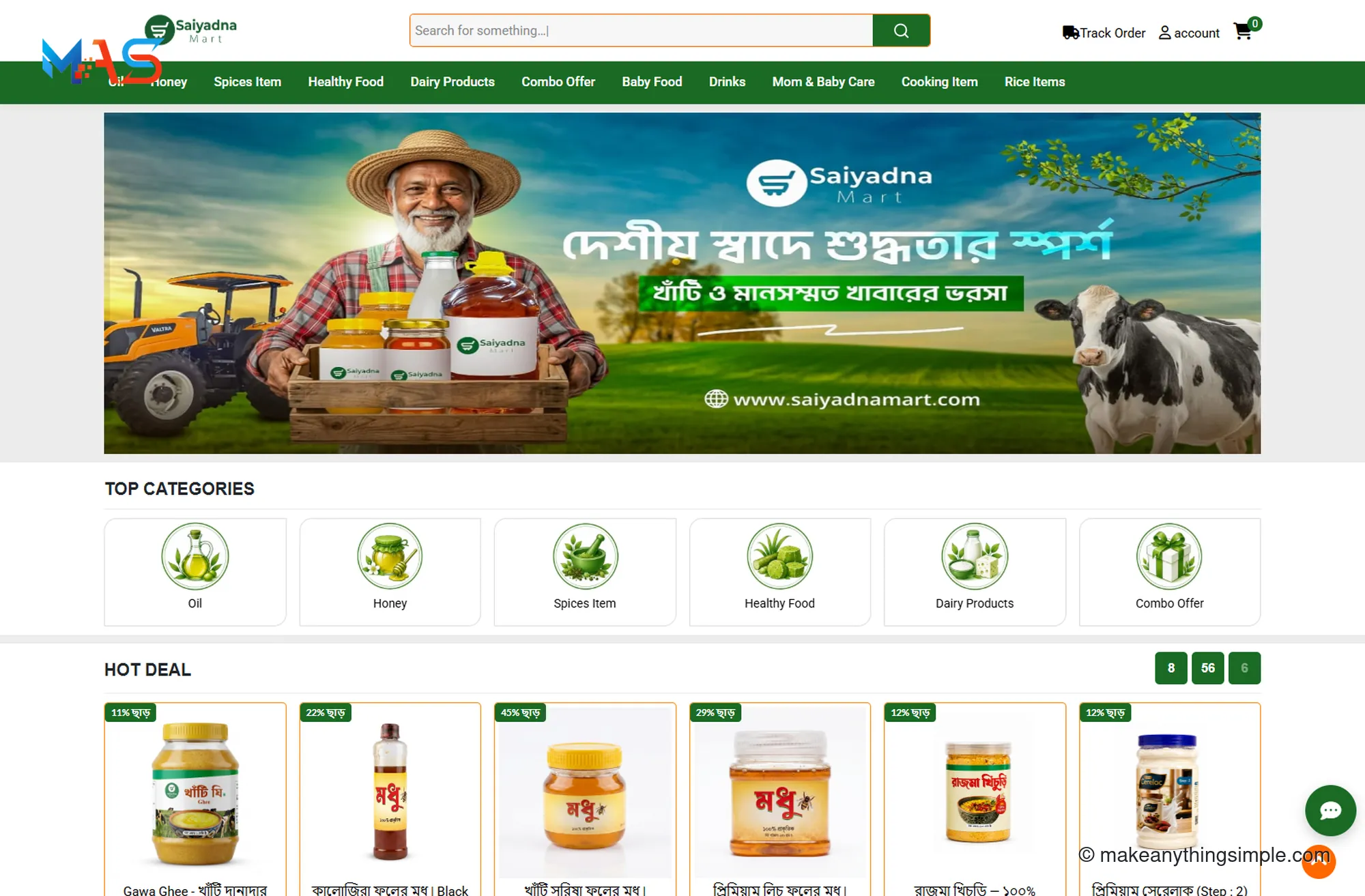
I built Saiyadna Mart as a custom ecommerce storefront for browsing and ordering grocery and food products online. This case study documents the live customer journey and the management and integration features present in the application's source.
The application runs on PHP and Laravel Framework 9.52.21, with Laravel Blade views and a frontend built using HTML, CSS, JavaScript, Bootstrap and jQuery.
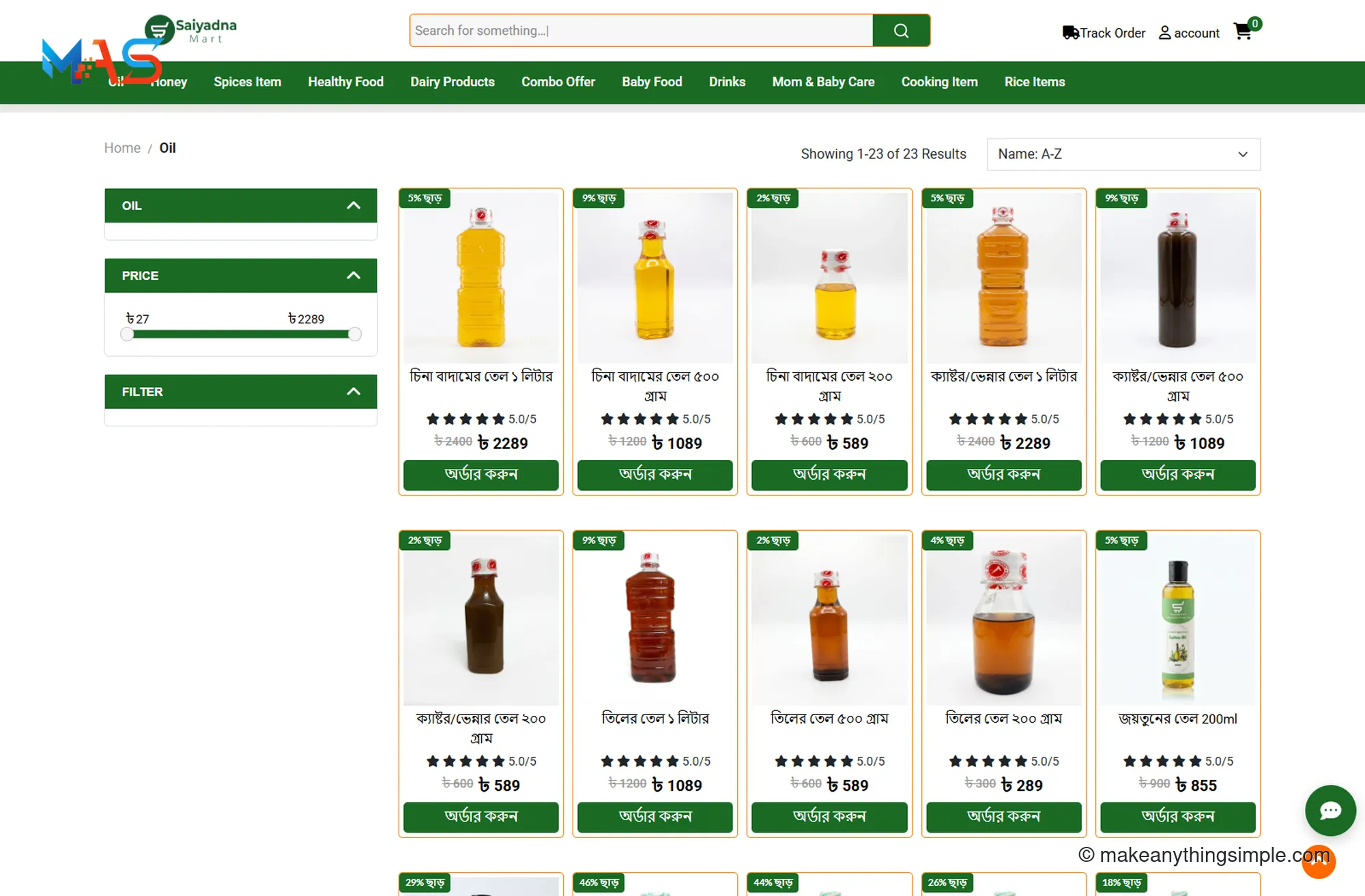
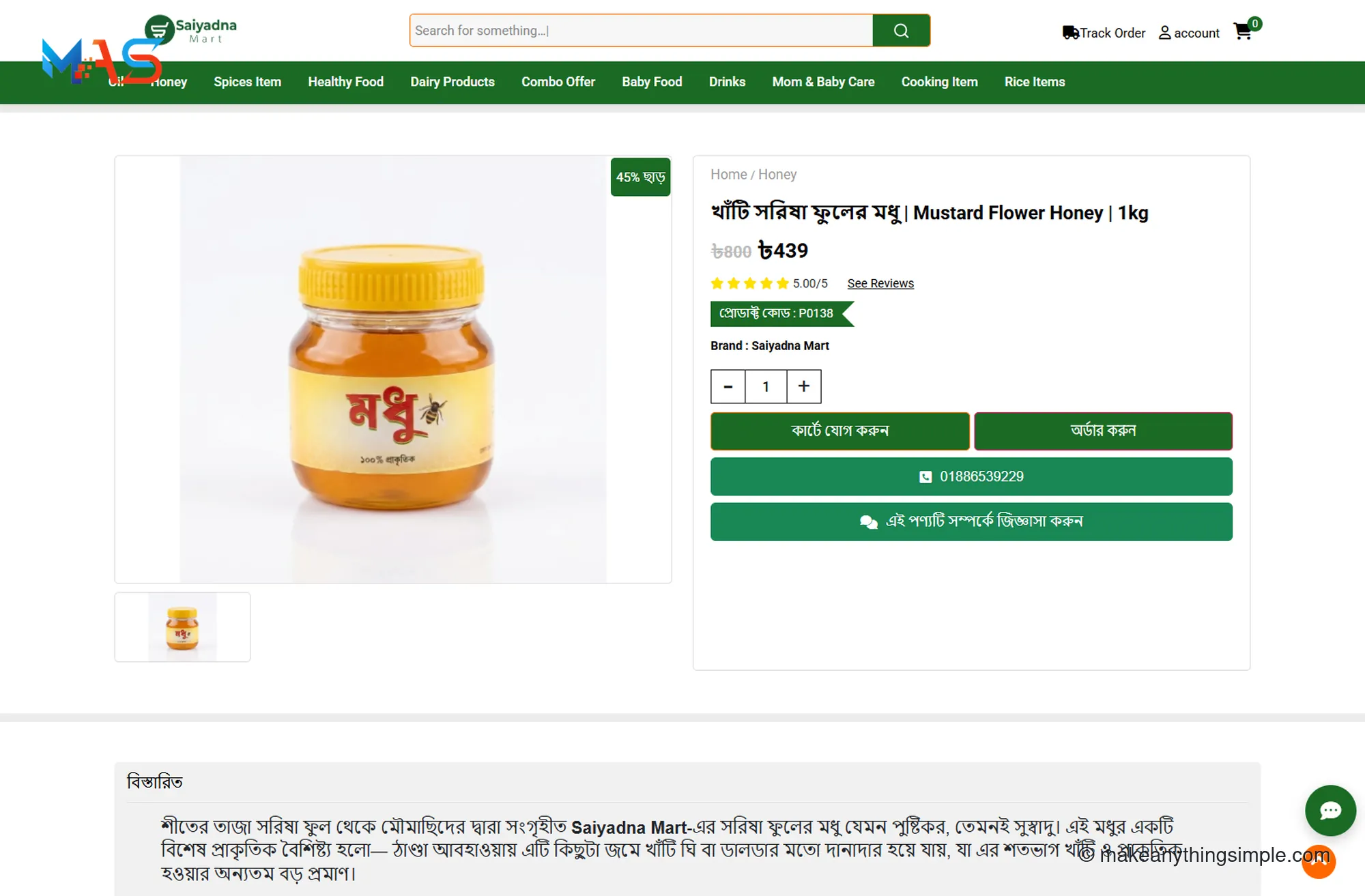
I organised the catalogue into product categories including oil, honey, spices, healthy food, dairy, combo offers, baby food, drinks, cooking items and rice. The storefront includes category browsing, product search, promotional collections and individual product pages with product information, pricing, offers, ratings and quantity selection.
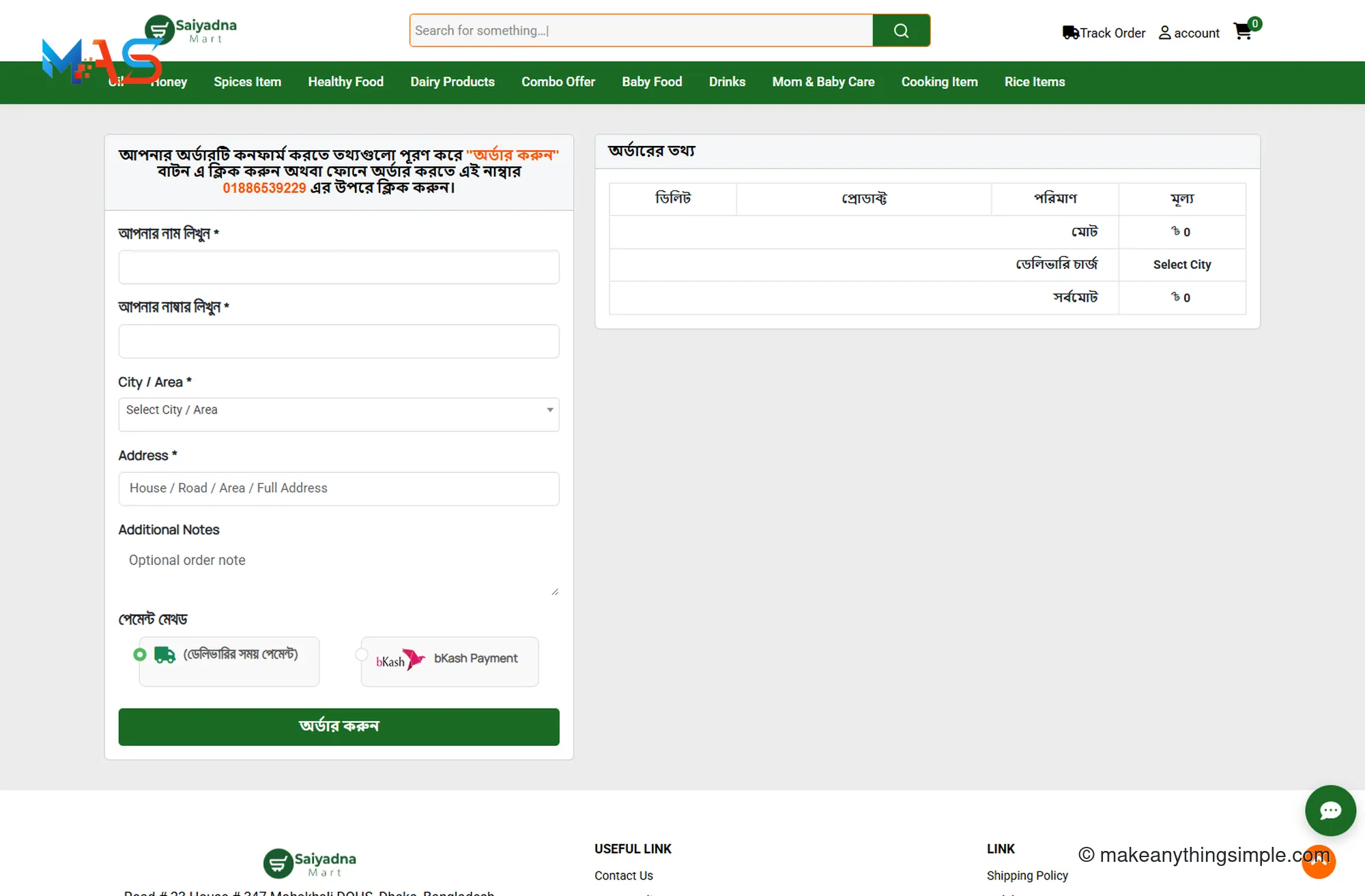
Customers can add products to the cart or choose a direct-order option, then provide their contact and delivery details at checkout. The checkout supports area-based delivery charges and presents Cash on Delivery and bKash payment options.
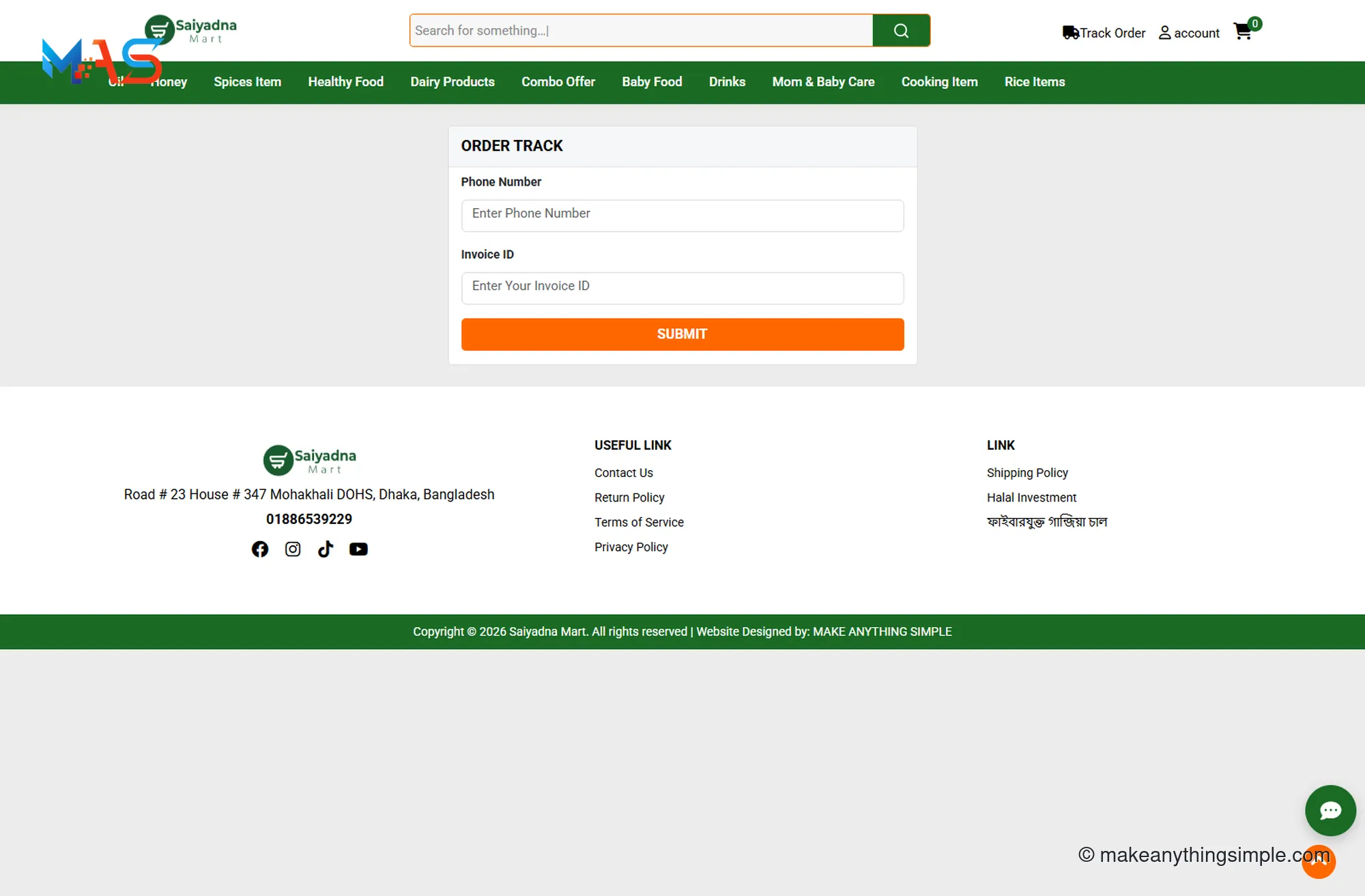
The order flow includes SMS notifications for the customer and a new-order alert for the store team, using the configured SMS gateway. Customers can track an order using their phone number and invoice ID. Product pages also provide phone and WhatsApp contact actions, and the storefront includes floating Messenger and WhatsApp shortcuts.
Store administrators can create and edit products, manage product availability and promotions, and use a downloadable spreadsheet template to bulk update product prices and stock from XLSX or CSV files. The price/stock import validates rows and accepts up to 5,000 product rows per upload.
The application generates an XML sitemap dynamically from available products, active categories and published pages. A separate Facebook product-feed endpoint renders the current product catalogue as XML. Product and category pages include page titles, meta descriptions, canonical and social-sharing metadata, alongside index/follow directives.
The tracking system provides Google Tag Manager, Google Analytics 4 and Meta Pixel integrations. Ecommerce events include page views, product and product-list views, search, add/remove to cart, cart views, checkout steps, payment and purchase, and wishlist actions. The application also includes a first-party event-collection endpoint for tracking.
This case study focuses on the customer-facing store and the source-verified catalog, order, SEO, feed and tracking capabilities. It does not make claims about sales results or order volumes.