

 Bonani DOSH, Dhaka - 1230, Bangladesh


Local SEO for Bangladesh Service Businesses: A Practical Guide
For a service business in Bangladesh, being visible when nearby customers search online can make the difference between a missed enquiry and a booked conversation. Local SEO helps your business appear in relevant local searches, map results and trusted recommendations without depending entirely on paid advertising.
This practical guide explains how to build a stronger local presence for a service business in Dhaka, Chattogram, Sylhet, Rajshahi or any other target area. The goal is not to chase shortcuts. It is to make your business information clear, consistent and genuinely useful so the right customers can find you, understand your offer and take the next step.
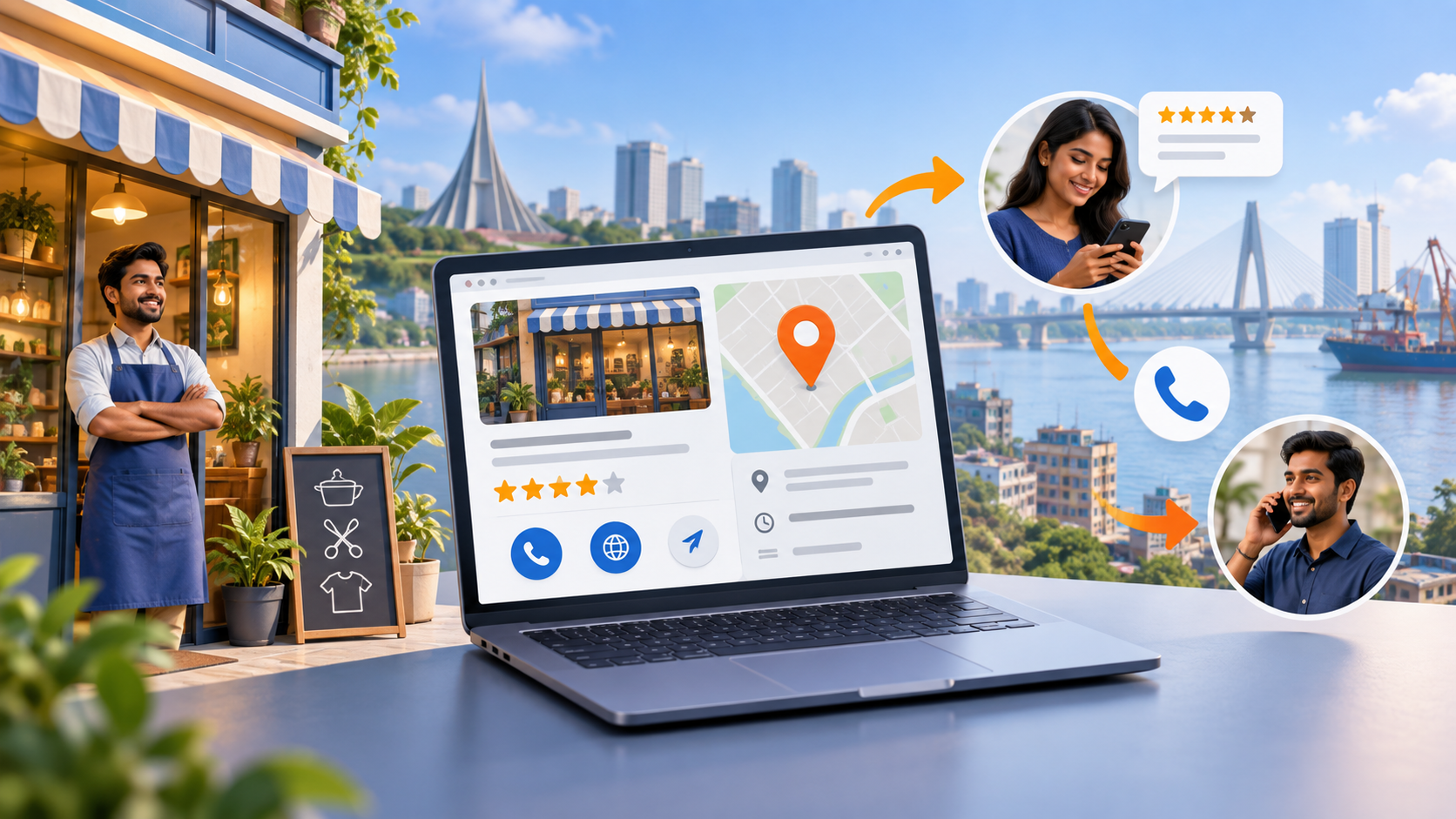
What local SEO means for a service business
Local SEO is the work of making your business easier to discover when people search for a service in a particular place. Someone may search for a web developer in Dhaka, an SEO consultant in Chattogram, a designer near Dhanmondi or a digital marketing agency in Bangladesh. These searches carry useful context: the person may already have a problem, a location and an intention to compare providers.
Your local presence should answer four questions quickly:
- What service do you provide?
- Which locations or customer types do you serve?
- Why should a customer trust you?
- How can the customer contact or book a conversation?
Why local visibility matters for Bangladesh service businesses
Customers often use a mix of Google Search, map results, social proof, recommendations and a company website before contacting a service provider. A complete local presence gives them consistent information at each stage. It also helps you attract enquiries that are more relevant than broad, untargeted traffic.
Local SEO is especially useful when your service depends on trust, location, response time or a clear consultation process. It can support a business that serves one city, several cities or customers across Bangladesh. It does not replace good delivery: the business information, service quality and customer experience still need to match.
1. Complete your Google Business Profile accurately
Start with the profile that customers are most likely to see in local search and map results. Use your real business name, accurate service area, phone number, website and working hours. Select the most relevant primary category and add supporting services only when they genuinely describe your offer.
Add current photos that help customers understand the business. Depending on your service, useful images may include your workspace, team, process, portfolio examples or branded service materials. Keep the profile updated when your hours, service area, contact details or services change.
Do not add keywords to your business name, use a false address or publish information that is not true. Short-term shortcuts can create long-term trust and visibility problems.
2. Keep your business information consistent
Your business name, address or service area, phone number and website should match across your website, business profiles and important directories. Small differences can confuse customers and make it harder for search engines to connect references to the same business.
Create a simple master record for your business details. Before publishing a new profile or directory listing, compare it with that record. If you work remotely or serve customers at their location, explain the service area clearly instead of presenting an address that customers cannot visit.
3. Create useful service pages for real customer needs
A local service page should do more than repeat a keyword and a city name. Explain the problem you solve, who the service is for, what the process looks like, what the customer needs to provide and how the next step works. Use natural location references only when they help the reader.
If you serve multiple locations, create separate pages only when each page can provide useful, distinct information. Add relevant local context, delivery expectations or examples where appropriate. Avoid making near-identical pages that only swap the city name; those pages are difficult for customers to trust and maintain.
For example, your SEO Solutions pricing page can explain available service options, while this guide answers common questions from Bangladesh service businesses.
4. Build trust with genuine reviews
Ask real customers for honest feedback after delivering useful work. Make the request simple and explain where the customer can leave feedback. Never offer rewards for a particular rating, write a review on a customer’s behalf or publish feedback that is not genuine.
Respond to positive and negative feedback politely. A useful response acknowledges the customer’s experience and moves sensitive details to a private channel when necessary. Reviews are not only a ranking signal; they are also part of the decision-making process for someone comparing service providers.
5. Publish content that helps local customers
Write about questions your target customers actually ask: how to choose a provider, what information is needed to start a project, common mistakes, realistic timelines and how success will be measured. Bangladesh-specific examples add value when they are accurate and relevant, not when they are added only to repeat a location keyword.
Useful content can support broader topics such as turning ad clicks into enquiries and choosing between Facebook Ads and Google Ads. Link related articles to the service page that helps the reader take action.
6. Improve the technical basics
Make sure your pages load well on mobile, use readable headings, have descriptive page titles and include a clear contact path. Check that important pages are indexable, that internal links work and that your XML sitemap reflects the pages you want search engines to discover.
Add structured data only when it accurately describes the business and page. Keep the page’s visible information consistent with its metadata. A technically clean page cannot compensate for unclear service information, but technical problems can prevent good content from being discovered or used.
7. Make the next action obvious
A local visitor should not have to search for the way to contact you. Place a clear call to action near the important service information. Depending on the business, that might be a call, WhatsApp message, contact form, consultation request or pricing page.
Keep the first step low-friction. Ask only for information the team needs to respond well, and explain what happens after the form is submitted. A clear process improves both conversion quality and customer confidence.
8. Track actions, not just rankings
Rankings can be useful diagnostic signals, but they are not the final business outcome. Monitor calls, contact-form submissions, quote requests, direction requests, WhatsApp conversations and qualified enquiries. Record the service and location context when it is available.
Compare the quality of enquiries over time. A smaller number of well-matched enquiries may be more valuable than a large amount of unrelated traffic. Use the data to improve the service page, offer, response process and content topics.
A practical local SEO checklist
| Area | What to check | Useful outcome |
|---|---|---|
| Business profile | Name, category, service area, hours, phone and website are accurate | Customers can understand and contact the business |
| Service pages | Clear offer, audience, process, proof and next step | More relevant visitors can take action |
| Reviews | Honest feedback and thoughtful responses | Stronger trust before the first conversation |
| Technical SEO | Mobile usability, speed, metadata, links and indexability | Search engines and customers can use the page |
| Measurement | Calls, forms, messages and qualified enquiries are recorded | Decisions are based on business value |
A simple 30-day local SEO action plan
Week 1: Clean up the foundation
- Verify your business details and service area everywhere customers may find you.
- Complete the main business profile and replace outdated photos or hours.
- Test the phone, contact form, WhatsApp link and website from a mobile device.
Week 2: Improve the pages that convert
- Review the main service page and make the target customer and offer obvious.
- Add a short process section, proof or examples and a clear next action.
- Repair broken internal links and connect useful articles to the relevant service page.
Week 3: Build useful trust signals
- Request honest reviews from recent customers without influencing the rating.
- Publish one helpful local customer guide based on real questions.
- Respond to existing reviews and enquiries with accurate, helpful information.
Week 4: Measure and improve
- Record calls, forms, messages and qualified enquiries.
- Compare which topics and pages produce useful conversations.
- Choose the next improvement based on customer questions and measured friction.
Note: Local SEO is a compounding process. Accurate information, useful pages and genuine customer experiences are safer and more sustainable than shortcuts or keyword-filled listings.
Final recommendation
Local SEO works best as a consistent business practice: accurate information, useful service pages, authentic customer feedback and a friction-free way to contact you. If you want help planning the right approach, review our SEO Solutions or contact the MAS team with your target service and location.
Frequently Asked Questions
How long does local SEO take to show results?
Timing varies by market, competition, website quality and consistency. Some improvements can be visible quickly, while stronger local visibility usually requires several weeks or months of steady work.
Do I need a physical shop for local SEO?
Not always. Service-area businesses can still build a local presence, but they should clearly describe where they serve customers and follow the rules of each platform they use.
Should I create a separate page for every city?
Only when you genuinely serve that location and can provide useful, distinct information. Thin duplicate pages can confuse customers and add little value.
Are customer reviews important for a service business?
Honest reviews help potential customers understand the experience of working with you. They should reflect real customer feedback and should never be fabricated or selectively manipulated.
Can local SEO replace paid advertising?
Local SEO and paid advertising serve different purposes. Local SEO supports durable organic visibility, while advertising can help you reach a targeted audience quickly. Many businesses use both and measure the results separately.